
TRT Guide
How to Decide If You Need TRT After 40
Deciding whether to start testosterone replacement therapy after age 40 is a common and important question for men who notice fatigue, low libido, muscle loss,…
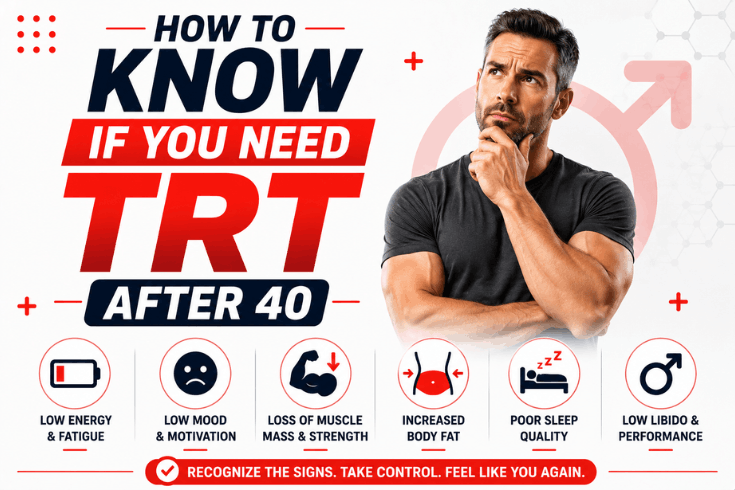
Deciding whether to start testosterone replacement therapy after age 40 is a common and important question for men who notice fatigue, low libido, muscle loss, or mood changes. This guide walks through the clinical steps, objective tests, and practical factors to help you make an informed choice with your clinician.
We cover how to recognize meaningful symptoms, which blood tests and imaging matter, treatment options and monitoring, plus lifestyle strategies you must try first. The goal is a clear, actionable pathway from symptom to safe, evidence-based care.
Recognize symptoms that matter
Not every tired man needs TRT. Focus on clusters of symptoms that reduce quality of life. Key signs include persistent low energy, decreased sexual desire or function, measurable loss of muscle mass or strength, increased body fat, and cognitive softening like brain fog.
Tip: Track symptoms for 3-6 months and rate severity from 1-10. Clinically relevant low testosterone is most likely when several domains are affected simultaneously.
Initial evaluation: what your clinician will check
A careful history and physical exam matter. Your clinician will review medications, sleep, alcohol use, chronic diseases, and recent weight changes. They will check vital signs and look for physical signs such as decreased body hair, testicular atrophy, or gynaecomastia.
Laboratory screening should include:
- Total testosterone measured in the morning between 7-10 AM on at least two separate occasions.
- Sex-hormone binding globulin when total testosterone is borderline, and free testosterone if available.
- LH and FSH to distinguish primary versus secondary hypogonadism.
- Prolactin when symptoms or LH/FSH suggest pituitary involvement.
- Baseline safety labs: CBC, CMP, fasting glucose or HbA1c, lipid profile, and PSA for men over 40.
Interpreting testosterone numbers
Guidelines commonly use total testosterone thresholds around 300 ng/dL. Values below 300 ng/dL with consistent symptoms typically justify further evaluation for TRT. Results in the 300-400 ng/dL range are considered borderline and need symptom correlation plus free testosterone assessment.
Remember that lab reference ranges vary by assay and lab. Always interpret results with your clinician and repeat testing to confirm persistent low levels.
Distinguish causes: primary, secondary, and transient
Understanding cause directs treatment. If LH and FSH are elevated, the problem is likely testicular (primary). If LH and FSH are low or normal, central causes such as pituitary dysfunction, medications, obesity, or chronic illness are likely (secondary).
Transient low testosterone can occur with acute illness, recent steroid use, or major weight change. Repeat labs after addressing reversible factors before committing to lifelong therapy.
When TRT is appropriate
Start TRT when the patient has consistent, bothersome symptoms and confirmed low testosterone on repeat morning tests. Also ensure no contraindications are present and baseline safety labs are acceptable.
Common contraindications include active prostate cancer and untreated severe sleep apnea. Discuss fertility goals up front because TRT can suppress sperm production.
TRT options, with pros and cons
There are several delivery methods. Choice depends on lifestyle, cost, and side-effect profile.
- Intramuscular injections – often testosterone cypionate or enanthate. Pros: low cost, reliable levels. Cons: peaks and troughs; injection frequency ranges from weekly to every 2-3 weeks.
- Subcutaneous pellets – implanted every 3-6 months. Pros: steady levels, low maintenance. Cons: outpatient procedure, variable absorption.
- Topical gels or creams – daily application. Pros: steady physiologic absorption. Cons: risk of transfer to partners or children; daily adherence required.
- Transdermal patches – daily; similar pros and cons to gels.
- Oral and nasal formulations – available in some regions; consider absorption and liver safety for oral agents.
Monitoring and safety while on TRT
After initiating therapy, monitor clinically and with labs. Check testosterone level 4-12 weeks after dose adjustments to target mid-normal range. Repeat CBC at 3 months then every 6-12 months to watch for polycythemia; stop or reduce dose if hematocrit exceeds 54 percent.
Check PSA at baseline and periodically, especially if over age 40. Monitor lipids, liver enzymes if indicated, and symptom changes. Evaluate mood, sleep, and sexual function at each follow-up.
Manage risks and side effects
Common side effects include acne, testicular shrinkage, and increased hematocrit. Strategies include dose adjustment, switching formulation, or therapeutic phlebotomy for significant polycythemia. Maintain communication with your clinician to address sexual function, mood, and cardiovascular concerns.
Role of lifestyle and alternative strategies
Before or alongside TRT, address modifiable factors that influence testosterone. Evidence-backed interventions include:
- Resistance training – 2-4 sessions per week improves muscle mass and insulin sensitivity.
- Protein-focused nutrition – 20-40 g protein per meal supports muscle and recovery.
- Weight loss – losing 5-15 percent of body weight can raise testosterone in obese men.
- Optimize sleep – aim for 7-9 hours per night; short sleep reduces testosterone.
- Limit alcohol and review medications that lower testosterone such as opioids and glucocorticoids.
Supplement use should be evidence based. Vitamin D repletion helps if you are deficient, and zinc can assist if levels are low. Avoid unregulated herbal mixtures promising quick testosterone boosts.
Practical decision pathway
- Track symptoms for 3 months and rate impact.
- Obtain morning total testosterone on two separate days plus LH/FSH, prolactin if indicated.
- Address reversible causes: weight loss, sleep, medication review.
- If low testosterone persists with symptoms, review risks and fertility plans and choose a TRT method.
- Start therapy with baseline labs, then monitor regularly for effectiveness and safety.
Real-world example
Case: A 47-year-old male with two years of progressive fatigue, reduced libido, and a 15 pound weight gain despite regular exercise. Morning total testosterone measured 265 ng/dL twice. LH and FSH were normal. After discussing fertility goals, he began a topical gel, with labs checked at 8 weeks showing testosterone in the mid-normal range and hematocrit stable. He also implemented weekly resistance training and a 500 calorie-per-day deficit and lost 10 pounds in 10 weeks. His energy and libido improved by month 3.
Frequently Asked Questions
How do I know if my testosterone is low?
Low testosterone is suspected when several symptoms appear together, such as low libido, fatigue, muscle loss, and mood changes. Confirm diagnosis with two morning total testosterone tests and correlate results with symptoms before considering TRT.
What is a normal testosterone level for men over 40?
Reference ranges vary, but many guidelines use total testosterone of approximately 300 ng/dL as a threshold. Results between 300-400 ng/dL are borderline and require clinical context and possibly free testosterone measurement.
Can lifestyle changes fix low testosterone?
Yes. Weight loss, resistance training, improved sleep, and reducing alcohol can raise testosterone, especially in men with obesity or metabolic syndrome. Lifestyle steps should be tried first or combined with TRT when indicated.
What tests are needed before starting TRT?
At minimum, get two morning total testosterone tests, LH and FSH, CBC, CMP, fasting glucose or HbA1c, lipid profile, and PSA if over 40. Additional testing such as prolactin or pituitary imaging is ordered when indicated by symptoms or hormone abnormalities.
Does TRT affect fertility?
Yes. Exogenous testosterone suppresses sperm production by lowering intratesticular testosterone and LH. Men who want to preserve fertility should discuss alternatives such as clomiphene citrate, hCG, or sperm banking before starting TRT.
How quickly will I feel benefits from TRT?
Many men notice improved libido and energy within 3-6 weeks, with maximal benefit for strength and body composition by 3-6 months. Individual response varies, and monitoring guides dose adjustments.
Conclusion
Deciding on TRT after age 40 should follow a stepwise, evidence-based approach that balances symptoms, objective labs, and personal goals. Start with lifestyle optimization, confirm low testosterone with repeat morning tests, evaluate for reversible or secondary causes, and then consider therapy if indicated.
Work closely with a clinician to choose the right formulation, monitor safety, and adjust therapy. With careful evaluation and monitoring, TRT can meaningfully improve energy, strength, and sexual health for appropriately selected men.
Disclaimer
This blog is for informational and educational purposes only and does not constitute medical advice, diagnosis, or treatment. The content provided is based on general health information and research available as of the publication date. Individual health conditions vary, and what works for one person may not be appropriate for another.
Always consult with a qualified healthcare provider before starting any new treatment, including testosterone replacement therapy (TRT), making changes to existing treatments, or if you have questions about your specific health condition. Never disregard professional medical advice or delay seeking it because of information you read on this blog.
If you are experiencing a medical emergency, call 911 or your local emergency services immediately. The information on this website does not create a doctor-patient relationship and should not be used as a substitute for professional medical advice, diagnosis, or treatment.